False Ceiling Singapore 2026: Cost, Design & L-Box Guide
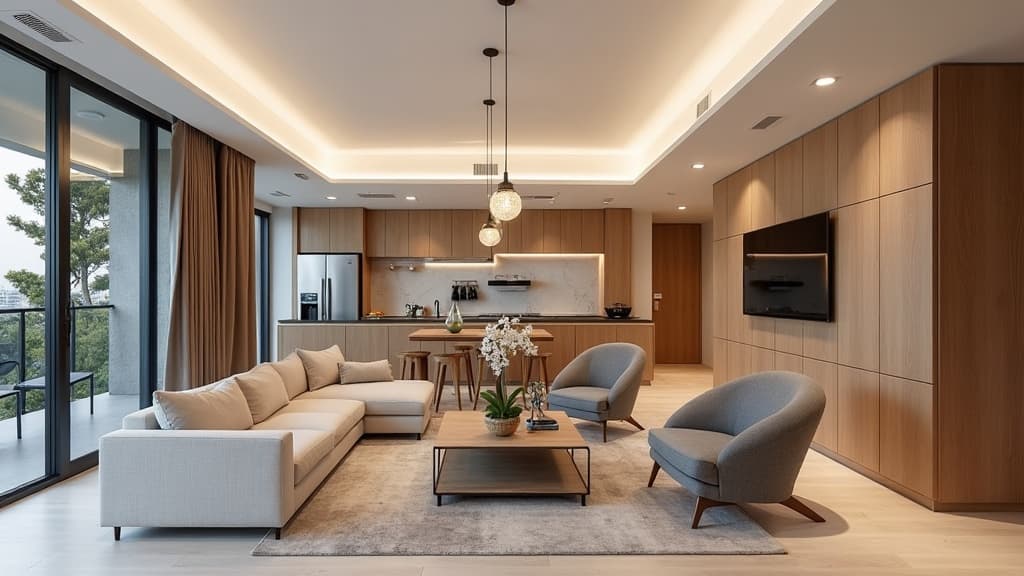
False Ceiling Singapore 2026: Cost, Design & L-Box Guide
A false ceiling in Singapore is a secondary ceiling built below the original, used to conceal aircon trunking, wiring and beams while housing cove lights and downlights. Costs typically run around S$5 to S$12 per square foot installed, with L-boxes priced per running foot. This guide covers false ceiling cost, the difference between an L-box and a full false ceiling, popular designs, and when each option makes sense for HDB and condo homes.
What Is a False Ceiling and Why Install One?
A false ceiling (also called a drop ceiling) is mounted a few centimetres below your original concrete ceiling on a metal frame, then finished with board and paint. In Singapore homes it serves several purposes:
- Conceals aircon trunking — the most common reason locally.
- Hides wiring and structural beams for a clean, intentional look.
- Houses concealed lighting — cove lights, downlights and LED strips.
- Defines zones in open-plan living and dining areas.
- Improves acoustics slightly by softening echo.
The main trade-offs are added cost and a small loss of ceiling height, which matters more in flats with lower ceilings.
False Ceiling Cost in Singapore (2026)
The figures below are approximate, installed price ranges for Singapore in 2026. Actual costs depend on design complexity, materials, lighting and contractor — always confirm with quotes.
| False Ceiling Type | Typical Use | Approximate Price |
|---|---|---|
| L-box (perimeter / single run) | Conceal aircon trunking, cove lighting | ~S$25–45 per running foot |
| Partial false ceiling | Over part of a room, zoning | ~S$5–10 per sqft |
| Full false ceiling | Whole-room seamless finish | ~S$6–12 per sqft |
| Cove light feature | Indirect ambient lighting | Add-on to box/ceiling cost |
| Bulkhead (kitchen/bath) | Conceal pipes in wet areas | ~S$25–45 per running foot |
As a rough whole-room guide, a living-room false ceiling commonly falls in the approximate S$1,500–S$4,000+ range. For a tailored figure, use the renovation cost calculator to estimate it within your overall budget in SGD.
L-Box vs Full False Ceiling: Which Should You Choose?
This is the key decision for most homeowners.
L-Box
- A partial drop-down box, usually along the perimeter or a single edge.
- Conceals aircon trunking and creates cove lighting.
- Cheaper, faster, and preserves most of your ceiling height.
- Ideal for HDB flats where height is limited.
Full False Ceiling
- Covers the entire ceiling area for a seamless, premium look.
- Best for hiding extensive services or beams across the whole room.
- More expensive and drops the ceiling height across the room.
- Common in condos and homes with generous ceiling height.
Rule of thumb: In a typical HDB flat, an L-box around the perimeter gives you the lighting effect and trunking concealment without making the room feel low. Reserve full false ceilings for higher-ceilinged spaces or where you need to hide a lot.
Popular False Ceiling Designs in Singapore
Design trends for 2026 lean clean and layered:
- Cove lighting: Hidden LED strips that wash the ceiling with soft, indirect light — the most popular feature.
- Recessed downlights: Flush spotlights for a minimalist look.
- Stepped / layered ceilings: Multiple drop levels for visual depth in larger rooms.
- L-box with linear lighting: A modern, architectural perimeter effect.
- Bulkheads in kitchens and bathrooms: Practical concealment that doubles as a design line.
For a cohesive look, pair your ceiling with the rest of the room's scheme — see our modern contemporary living room designs and our broader HDB living room design ideas for inspiration on lighting and layout.
Materials: Gypsum vs Calcium Silicate
- Gypsum (plasterboard): The standard choice — smooth, paintable, and great for cove lighting. Best for dry areas.
- Calcium silicate board: More moisture-resistant, used in kitchens, bathrooms and damp-prone spots.
Framing quality matters too. A well-built metal frame prevents sagging and cracking over time, so ask about the framing spec, not just the board.
False Ceiling Repair: What to Watch For
False ceilings can develop issues over the years. Common ones include:
- Hairline cracks at joints from settlement or thermal movement.
- Water stains from aircon condensation or upstairs leaks.
- Sagging from poor framing or moisture damage.
Minor cracks are usually a simple patch-and-repaint job. Water stains should be traced to the source (often aircon drainage) before cosmetic repair, or they will return. For significant sagging, have a contractor inspect the framing rather than just patching the surface.
What Affects False Ceiling Price
Two quotes for the same room can differ a lot. The main cost drivers are:
- Coverage: A full ceiling costs more than a perimeter L-box or partial drop.
- Design complexity: Stepped, layered or curved designs need more framing and labour than a flat drop.
- Lighting integration: Cove lighting, multiple downlights and LED strips add material and wiring cost.
- Material choice: Calcium silicate board for wet areas typically costs more than standard gypsum.
- Height of drop and access: Concealing bulky trunking or working around awkward beams adds time.
- Room size and shape: Larger and more irregular rooms increase running-foot and per-sqft totals.
Get at least three itemised quotes so you can compare scope — not just headline price — and confirm the board type and framing spec in writing.
False Ceiling Installation: What to Expect
A typical false ceiling install follows a clear sequence and is usually done before flooring and final painting:
- Framing: A metal channel grid is fixed to the original ceiling, levelled to the planned drop height.
- Service routing: Aircon trunking, wiring for lights, and any speakers are run within the cavity.
- Boarding: Gypsum or calcium silicate boards are screwed to the frame.
- Jointing and skimming: Seams are taped and skimmed for a seamless surface.
- Lighting fit-out: Downlights, cove strips and any L-box lighting are installed and tested.
- Painting: The finished ceiling is primed and painted, usually to match the walls or in a clean white.
Coordinating this with your aircon installer and electrician is essential, since everything hidden in the cavity must be in place before the boards close it up.
Is a False Ceiling Worth It for Your Home?
Consider a false ceiling or L-box if you:
- Have exposed aircon trunking you want hidden.
- Want layered, ambient lighting beyond a single ceiling light.
- Are renovating the living room and want a polished, designed finish.
It may be less worthwhile if your ceiling is already low and you have minimal services to conceal — in that case, a slim L-box or simple surface-mounted lighting may serve you better.
False Ceilings in Different Rooms
Where you install a false ceiling changes the brief:
- Living room: The most common location. A perimeter L-box with cove lighting plus a few downlights is the classic Singapore setup, concealing aircon trunking while adding ambience.
- Bedrooms: Often a simple L-box over the bed or along the aircon run, keeping the centre at full height for a restful feel.
- Kitchen: Usually a bulkhead to hide pipes and ducting, frequently in moisture-resistant board.
- Bathroom: A partial drop or bulkhead conceals plumbing and ventilation; calcium silicate board suits the damp environment.
- Dining / entryway: A feature drop or layered ceiling can define the zone in open-plan layouts.
Tips to Get the Most From a False Ceiling
- Plan lighting first. Decide on cove lights and downlight positions before framing, since wiring is hidden in the cavity.
- Mind the height. In low-ceilinged flats, favour an L-box over a full drop to keep the room feeling open.
- Coordinate trades. Aircon and electrical work must be complete inside the cavity before boarding.
- Use the right board. Specify moisture-resistant board for kitchens, bathrooms and damp-prone spots.
- Keep it serviceable. Leave access where needed for aircon servicing and concealed wiring.
Visualise Your Ceiling Design First
Lighting and ceiling design are hard to picture from a quote. Try ElumiHome's AI room redesign to preview cove lighting, L-box and full false-ceiling looks in your own room — and get an approximate SGD renovation cost estimate alongside it, so you can plan the finish and the budget together. Start your free redesign and estimate now.
Frequently Asked Questions
- How much does a false ceiling cost in Singapore?
- A false ceiling in Singapore typically costs roughly S$5 to S$12 per square foot installed, with L-boxes and partial designs charged per running foot. A full living-room false ceiling commonly lands in the approximate range of S$1,500 to S$4,000 or more, depending on size, design complexity and lighting. Prices vary by contractor and finish, so get quotes for your actual space.
- Is a false ceiling worth it?
- A false ceiling is worth it if you want to conceal aircon trunking, wiring and structural beams while adding cove or recessed lighting for ambience. It instantly makes a space look more polished and intentional. The trade-offs are added cost and slightly lower ceiling height, so in flats with low ceilings an L-box or partial design is often the smarter choice.
- What is a false ceiling used for?
- A false ceiling is a secondary ceiling built below the original one, mainly used to hide aircon piping, electrical wiring and beams, and to house concealed lighting such as cove lights and downlights. It also improves the finished look of a room and can help with acoustics. In Singapore it is especially popular for concealing aircon trunking in living rooms and bedrooms.
- What is the difference between an L-box and a full false ceiling?
- An L-box is a partial drop-down box that runs along the perimeter or a single edge of the ceiling, usually to conceal aircon trunking or create cove lighting, while leaving most of the original ceiling exposed. A full false ceiling covers the entire ceiling area. L-boxes are cheaper, preserve more height and are popular in HDB flats, while full false ceilings give a seamless, premium finish at higher cost.
- Does a false ceiling lower my ceiling height?
- Yes, a false ceiling drops the finished ceiling by a few centimetres to accommodate the framing and any concealed lighting or trunking. In typical HDB flats with limited height, this is one reason many homeowners choose an L-box around the perimeter rather than a full drop, keeping the centre of the room at full height while still concealing services.
- What materials are false ceilings made of in Singapore?
- Most false ceilings in Singapore are made from gypsum (plasterboard) on a metal frame, which gives a smooth, paintable finish ideal for cove lighting. Calcium silicate board is sometimes used in wet or damp-prone areas for better moisture resistance. The choice affects durability and price, so confirm the material and the framing quality in your quote.
See your home transformed in typically 1–2 minutes
Upload your room photo and get stunning AI redesigns with HDB prompt-based HDB planning guidance and indicative SGD renovation cost ranges.
Try 1 Room FreeNo credit card required