Walk In Wardrobe Singapore: Design, Costs and Pole System Ideas
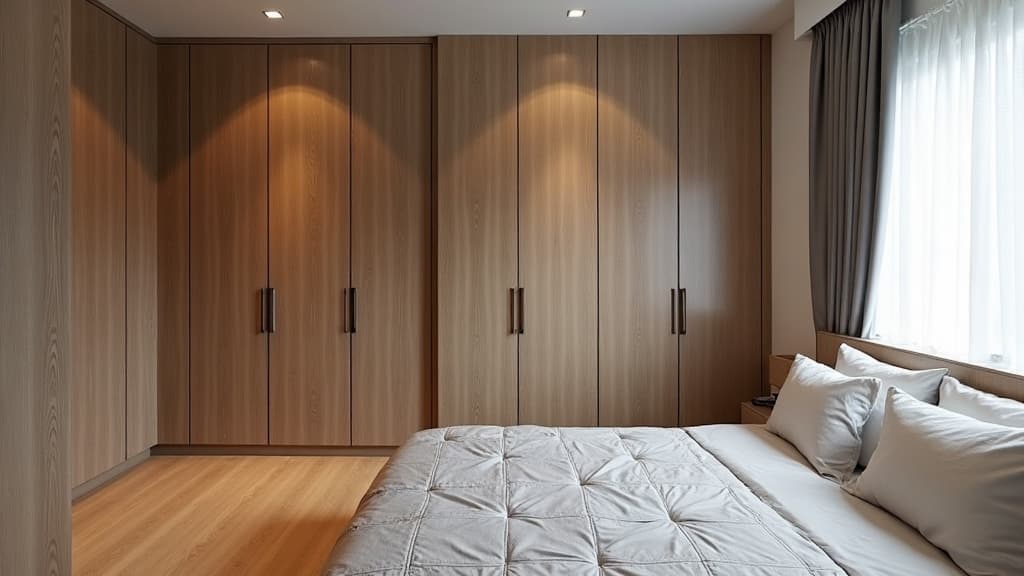
Walk In Wardrobe Singapore: Design, Costs and Pole Systems
A walk-in wardrobe in Singapore is more achievable than most people think — you need around 4 sqm, a clear walkway of at least 60-70 cm, and a system that suits your budget and climate. Costs typically run from about S$2,500 for an open pole system to S$8,000 or more for full carpentry with drawers, glass, and lighting. This guide walks through layouts, the open-vs-built-in decision, sizing, and how to keep clothes fresh in our humidity.
Do You Have Room for a Walk-In Wardrobe?
The honest first question. A walk-in wardrobe trades floor space for storage and a dressing experience, so it only makes sense if you have the room.
Minimum space guidelines
| Layout | Width needed | Walkway | Best for |
|---|---|---|---|
| Single-sided | 1.5-1.7 m | 60-70 cm | Narrow rooms, partitioned corners |
| L-shaped | 1.8-2.2 m | 70 cm+ | Corner of a master bedroom |
| Double-sided (galley) | 2.0-2.4 m | 70-90 cm | Converted small bedroom |
| U-shaped | 2.4 m+ | 90 cm+ | Executive flats, larger condos |
Anything tighter than a 60 cm aisle becomes awkward to use daily. If you cannot spare the floor area, a well-designed full-height built-in wardrobe along one wall often stores just as much.
Planning around the bedroom as a whole helps — see our master bedroom design ideas for how a wardrobe zone fits alongside the bed and circulation.
Open Pole System vs Built-In: The Core Decision
The biggest fork in walk-in wardrobe design in Singapore is whether to go open (pole/aluminium track systems) or fully built-in carpentry.
Open / pole system
- Pros: Lower cost, fast install, easy to reconfigure, airy and modern look, no door swing needed.
- Cons: Clothes exposed to dust and humidity, less polished, requires you to keep it tidy because everything is on show.
- Best for: Renters, tighter budgets, minimalist owners who keep a curated wardrobe.
The open wardrobe Singapore look — aluminium poles, open shelving, a feature lighting strip — has become popular precisely because it is flexible and relatively affordable. Pole systems are typically wall-mounted or floor-to-ceiling tension-mounted, so they suit HDB walls well.
Built-in carpentry
- Pros: Dust protection, seamless built-to-fit look, integrated drawers and lighting, stronger resale appeal.
- Cons: Higher cost, fixed once installed, longer lead time.
- Best for: Owners staying long-term who want a clean, protected, premium finish.
Semi-open hybrid
Many Singapore homes land in the middle: open hanging and shelving for everyday items, with closed drawers or glass-fronted cabinets for delicate pieces. This balances airflow, cost, and dust protection — a sensible compromise for our climate.
What It Typically Costs in Singapore
Walk-in wardrobe pricing is usually quoted by linear footage and finish, so two wardrobes of the same footprint can differ a lot.
- Open pole system: from around S$2,500, depending on length and accessories
- Mid-range built-in: roughly S$4,000-S$6,000 with drawers and basic lighting
- Premium built-in: S$8,000+ with glass doors, soft-close fittings, integrated LED, and feature finishes
Always get an itemised quote that lists the number of hanging rails, drawers, shelves, and any glass or lighting. Prices shift with material grade and labour, so treat these as ranges, not fixed figures.
Designing the System: Zones That Make Sense
A good walk-in wardrobe is planned around how you actually dress.
- Long hanging (about 150-160 cm clearance) for dresses, coats, long garments
- Double hanging (two rails, ~100 cm each) to double capacity for shirts and folded-over trousers
- Drawers for underwear, accessories, and folded knitwear
- Open shelves for bags and folded items you want visible
- Shoe storage at the base, angled or flat
- A dressing zone — even a narrow bench or a full-length mirror transforms the experience
A Muji-minimalist master bedroom pairs beautifully with an open or semi-open wardrobe: light timber, clean lines, and a restrained palette that keeps the clothes themselves as the visual interest.
Can HDB Flats Have Walk-In Wardrobes?
Yes — and it is common in larger flats. The two usual approaches:
- Convert a small bedroom in a 4-room, 5-room, or executive flat into a dedicated dressing room.
- Partition the master bedroom so part of it becomes a walk-in zone behind the bed or a partition wall.
Non-structural built-in carpentry generally does not need a permit. However, hacking any wall — even to widen a doorway — requires an HDB renovation permit and an HDB-licensed contractor. Always confirm the current rules with HDB before structural work. Our HDB renovation overview explains what typically needs approval.
For ideas on fitting wardrobe storage into tighter HDB bedrooms without a full walk-in, see our HDB bedroom design ideas.
Beating Singapore's Humidity
Open and semi-open wardrobes look great but expose clothes to our humid air. A few habits keep things fresh:
- Run a small dehumidifier or place moisture absorbers in the space
- Avoid cramming rails — leave airflow between garments
- Choose ventilated or louvred sections rather than fully sealed cabinets if you store leather
- Air the wardrobe occasionally by leaving doors or the room open
- Add warm LED lighting; it discourages damp, dim corners where musty smells start
Materials and Finishes
The finish you choose sets the entire mood of a walk-in wardrobe — and affects durability in our climate.
- Laminate: the most common and cost-effective; huge range of wood-grain and solid finishes, and it wears well day to day.
- Veneer: real wood surface for a warmer, more premium feel, at a higher cost.
- Aluminium framing and glass: the signature of modern open and semi-open systems; light, airy, and easy to keep clean.
- Fluted or rattan panels: a popular feature element that adds texture and character to a doorfront or end panel.
- Hardware: soft-close runners and hinges are worth the small premium, as drawers and doors in a wardrobe get heavy daily use.
For our humidity, favour ventilated sections for items that trap moisture, and keep a consistent finish across the system so it reads as one designed piece rather than a collection of parts.
Common Walk-In Wardrobe Mistakes to Avoid
A few errors turn a dream wardrobe into a daily frustration.
- Walkway too narrow: under 60 cm and you cannot open drawers or stand comfortably; protect the aisle first.
- Too much hanging, not enough drawers: most people own more folded items than they expect — balance the mix.
- Forgetting the mirror and dressing zone: a wardrobe you cannot get dressed in is just storage.
- Sealing everything in our climate: fully closed cabinets without airflow invite mustiness; build in ventilation.
- Underplanning lighting: dim corners hide clothes and make the space feel like a cupboard, not a dressing room.
- Ignoring resale: a heavily personalised open system may not suit the next owner; built-ins tend to hold broader appeal.
Lighting and Finishing Touches
- LED strips under shelves and along hanging rails for that boutique feel
- A full-length mirror — essential, and it bounces light to make the space feel larger
- Consistent finish — matching laminate or paint across the system reads as deliberate, not pieced-together
- A feature element — fluted glass doors, a rattan panel, or aged-brass handles for character
Quick Decision Guide
- Tight budget or renting → open pole system
- Long-term home, want it dust-free and seamless → built-in carpentry
- Want airflow plus some protection → semi-open hybrid
- Small HDB room → convert a bedroom or partition the master; confirm any hacking with HDB
Visualise Your Walk-In Wardrobe First
Before committing to carpentry, see it. Upload a photo of your bedroom and ElumiHome's AI can show you open, built-in, and hybrid wardrobe designs in different styles and palettes — so you choose with confidence. Sign up free and design your wardrobe.
Frequently Asked Questions
- How much does a walk-in wardrobe cost in Singapore?
- A walk-in wardrobe in Singapore typically costs from around S$2,500 to S$8,000 or more, depending on size, materials, and system type. Open pole (aluminium) systems sit at the lower end, while full carpentry with drawers, glass doors, and integrated lighting costs considerably more. Get itemised quotes, as pricing depends heavily on linear footage.
- Can HDB flats have walk-in wardrobes?
- Yes. Many HDB owners create walk-in wardrobes in 4-room, 5-room, and executive flats, usually by converting a small bedroom or partitioning part of the master bedroom. You generally do not need a permit for non-structural built-in carpentry, but hacking any wall requires an HDB permit and a licensed contractor. Confirm with HDB before structural changes.
- Open (pole system) vs built-in wardrobe — which is better?
- Open pole systems are cheaper, faster to install, and easy to reconfigure, but they expose clothes to dust and humidity. Built-in wardrobes cost more but offer dust protection, a cleaner look, and better resale appeal. For Singapore's humid climate, many people prefer built-in or semi-open systems with a dehumidifying habit.
- How much space do you need for a walk-in wardrobe?
- A functional walk-in wardrobe needs roughly 4 sqm or more, with at least 60-70 cm of clear walkway between hanging rails. A single-sided layout fits in about 1.5-1.7 m of width; a double-sided (galley) layout needs around 2-2.4 m of width to keep the centre aisle comfortable.
- How do you keep a walk-in wardrobe from getting mouldy in Singapore?
- Keep air moving and humidity down. Use a small dehumidifier or moisture absorbers, avoid packing clothes tightly, leave gaps for airflow, and consider semi-open shelving or ventilated doors. Good lighting and the occasional door-open airing also help prevent mustiness in our humid climate.
See your home transformed in typically 1–2 minutes
Upload your room photo and get stunning AI redesigns with HDB prompt-based HDB planning guidance and indicative SGD renovation cost ranges.
Try 1 Room FreeNo credit card required