Japandi Interior Design Singapore — The Complete Style Guide
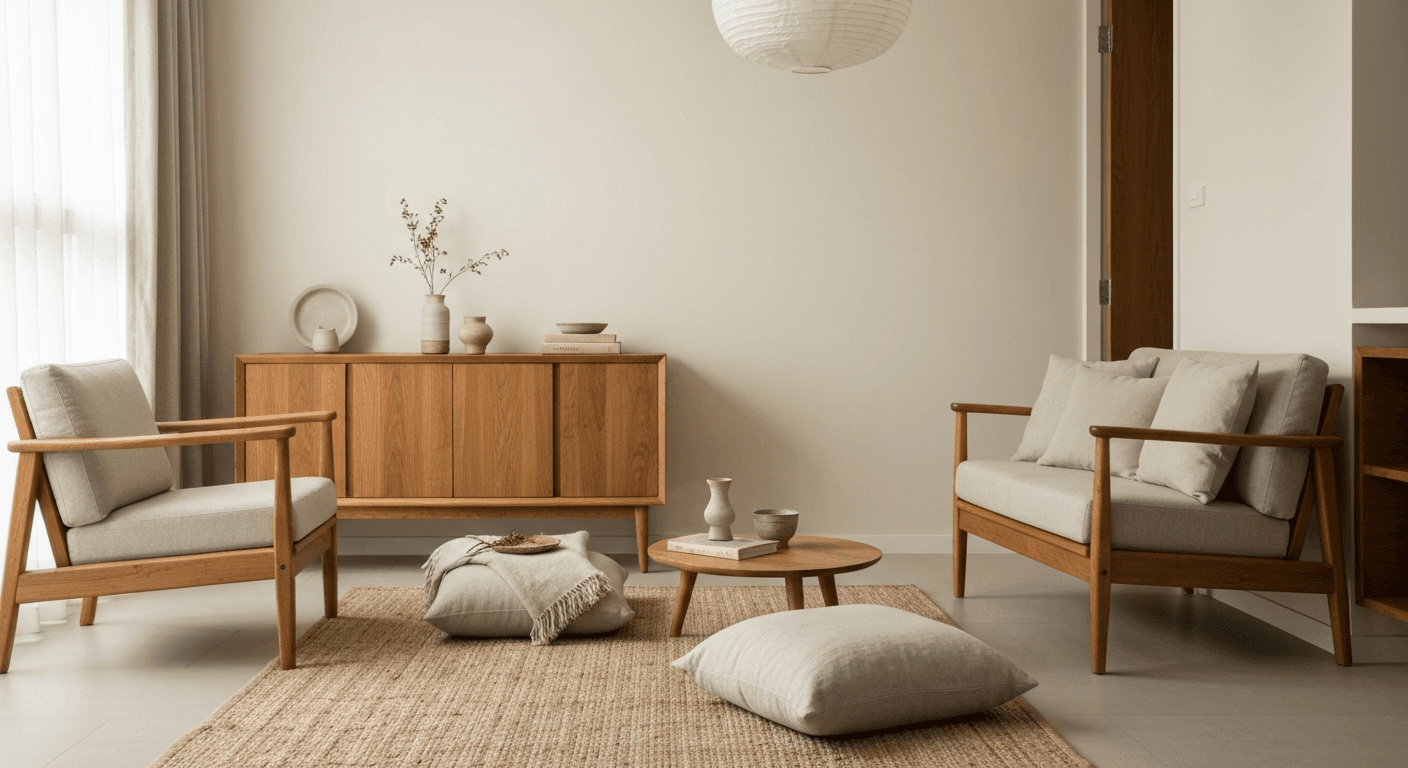
Japandi Interior Design Singapore: The Complete Guide
Japandi is Singapore's most popular interior design style — and it's easy to see why. The harmonious blend of Japanese minimalism and Scandinavian warmth creates homes that are calm, uncluttered, and deeply liveable. Perfect for Singapore's compact HDB flats and condos.
What is Japandi?
Japandi is a design philosophy that fuses:
- Japanese aesthetics: Wabi-sabi (imperfection), ikigai (purpose), ma (negative space), zen minimalism
- Scandinavian hygge: Warmth, cosiness, natural materials, and comfort
If you're trying to tell these closely related looks apart, our comparison of Japandi vs Scandinavian vs wabi-sabi breaks down where each one differs.
The result is a design style that's more lived-in than pure Japanese minimalism, more considered than Scandinavian cosiness, and uniquely suited to Singapore's urban lifestyle. If you're new to the style, start with our primer on what Japandi is and how it works in Singapore homes.
Why Japandi Works So Well in Singapore
Singapore homes face specific challenges that Japandi solves elegantly:
Small spaces: Japandi's commitment to minimal furniture and clever storage makes compact HDB flats feel spacious.
Tropical humidity: The natural materials at the core of Japandi — oak, linen, rattan — are breathable and perform well in Singapore's climate.
Warm lighting: Singapore's equatorial light is harsh. Japandi's preference for warm 2700K ambient lighting (rather than cool fluorescents) creates a calm, restful atmosphere.
Cultural resonance: Singapore's Chinese and Malay heritage shares aesthetic sensibilities with Japanese design — respect for nature, handcraft, and restraint.
The Japandi Colour Palette
Japandi's palette is defined by:
- Base: Warm white, oatmeal, cream (#F5F0E8, #E8E0D0)
- Mid-tones: Warm grey, sand, taupe (#D4C5A9, #C4B89C)
- Accents: Charcoal, matte black, deep brown (#2C2C2C, #4A4A4A, #8B7355)
- Nature touches: Sage green, dusty terracotta (sparingly)
Avoid: Cool whites, grey-blues, and anything with a synthetic feeling.
Key Japandi Design Elements
1. Natural Wood Tones
Light to medium wood tones are the backbone of Japandi. Specifically:
- White oak — the quintessential Japandi material. Light, warm, with subtle grain
- Ash — similar to oak, slightly greyer tone
- Bamboo — sustainable, Singapore-appropriate, beautiful patina
Avoid: Dark walnuts and mahogany (too heavy for Japandi), or pine (too informal). If you love these natural wood tones but want an even more pared-back feel, the closely related Muji-style interior design is worth exploring.
2. Linen and Organic Textiles
Natural fibres only in Japandi:
- Linen curtains — the sheer texture is quintessentially wabi-sabi
- Boucle upholstery — tactile, cosy, in cream or warm greige
- Wool rugs in muted tones — add warmth underfoot
- Cotton bedding — white or warm natural tones
Avoid: Velvet (too formal), polyester blends (too synthetic looking).
3. Rattan and Wicker Accents
Singapore's tropical climate makes rattan accents perfectly authentic in Japandi. Use:
- Rattan pendant light shades
- Wicker side tables or plant stands
- Rattan chair seats or armchairs
4. Minimal, Purposeful Decor
Every object in a Japandi home earns its place:
- A single ikebana-style floral arrangement (not a bouquet — an arrangement)
- Handmade ceramics in organic shapes
- One or two carefully chosen art pieces (not a gallery wall)
- Small sculptural objects — smooth river stones, a piece of driftwood
5. Clean Lines with Organic Softness
Japandi furniture blends Japanese rectilinearity with Scandinavian curves:
- Low-profile platform beds with clean frames
- Sofas with gentle curves, not sharp angles
- Coffee tables with slight chamfering on edges
Japandi for HDB Flats: Room by Room
Living Room
- Platform TV console in white oak or ash
- Low L-shaped sofa in warm grey boucle
- Natural linen curtains floor-to-ceiling
- Pendant rattan light over coffee table
- Hidden storage in built-in units (matching white walls)
Kitchen
- White cabinets (matte) with warm oak accents
- Quartz countertop in soft white or light grey
- Handleless J-pull cabinetry
- Under-cabinet LED strips (warm 2700K)
- A single plant (pothos or calathea) in a terracotta pot
Master Bedroom
- Platform bed in oak with integrated storage
- Full-wall built-in wardrobe in white matte lacquer with oak edge trim
- Blackout linen curtains
- Bedside pendant lights (rattan or washi paper shades)
- A single print or hanging textile above the bed
Bathroom
- Large format white/cream porcelain tiles
- Warm oak vanity with undermount sink
- Natural stone soap dish and accessories
- Minimal decor — a single potted succulent or small ceramic
Furniture Brands for Japandi in Singapore
| Budget | Brand | Why |
|---|---|---|
| $ | IKEA SG | STOCKHOLM and KALLAX lines, plus basic BILLY for bookcases |
| $$ | HipVan | Singapore-based, Japandi-friendly collection, fast delivery |
| $$ | FortyTwo | Wide Japandi selection, frequent sales |
| $$$ | Castlery | Premium quality, Singapore-designed, excellent oak pieces |
| $$$$ | Commune Lifestyle | Curated Japandi pieces, design consultation available |
| $$$$$ | Scanteak | All-teak furniture, beautiful but premium pricing |
Common Japandi Mistakes in Singapore
Too beige: Japandi uses warm neutrals, but all-beige can look flat. Add charcoal accents.
No texture: The tactile quality of Japandi — rough linen, smooth ceramics, woven rattan — is essential. Don't make it all smooth surfaces.
Too perfect: The wabi-sabi element means intentional imperfection. A slightly uneven handmade ceramic, a plant that's a bit asymmetrical — embrace it.
Ignoring storage: A Japandi home looks minimal because everything is stored. Invest in hidden storage before investing in furniture.
See Japandi in Your Singapore Home
ElumiHome generates Japandi AI redesigns for any Singapore room type — calibrated for HDB proportions, local materials, and tropical climate.
No credit card required · 1 free design · Results typically in 1–2 minutes
Frequently Asked Questions
- What is Japandi interior design?
- Japandi is a design style that fuses Japanese minimalism with Scandinavian warmth, emphasising natural materials, muted colours, and clutter-free spaces. It draws on Japanese concepts like wabi-sabi and ma alongside the cosy hygge sensibility of Scandinavian design. The result is calm, lived-in, and well-suited to Singapore homes.
- Why is Japandi so popular in Singapore?
- Japandi works well in Singapore because its minimal furniture and clever storage make compact HDB flats and condos feel spacious. Its natural materials like oak, linen, and rattan are breathable and cope reasonably with tropical humidity. The style's preference for warm lighting also softens Singapore's harsh equatorial light.
- How much does it cost to do a Japandi renovation in Singapore?
- A Japandi-style renovation costs roughly the same as any comparable HDB or condo renovation, typically S$30,000–S$60,000 for a full HDB flat depending on carpentry and finishes. Much of a Japandi look comes from restraint and natural-toned laminates rather than expensive materials. Custom low-profile carpentry and quality wood-look finishes are usually the main spend.
- What colours work best for a Japandi home in Singapore?
- Japandi palettes favour warm whites, greige, soft clay, and muted sage paired with natural wood tones like oak and ash. These warm neutrals counter the coolness of pure Japanese minimalism while keeping spaces serene. Adding one or two darker accent tones can give the scheme depth without breaking the calm.
See your home transformed in typically 1–2 minutes
Upload your room photo and get stunning AI redesigns with HDB prompt-based HDB planning guidance and indicative SGD renovation cost ranges.
Try 1 Room FreeNo credit card required