Fluted Panel Singapore Guide: Materials, Cost and Design Ideas
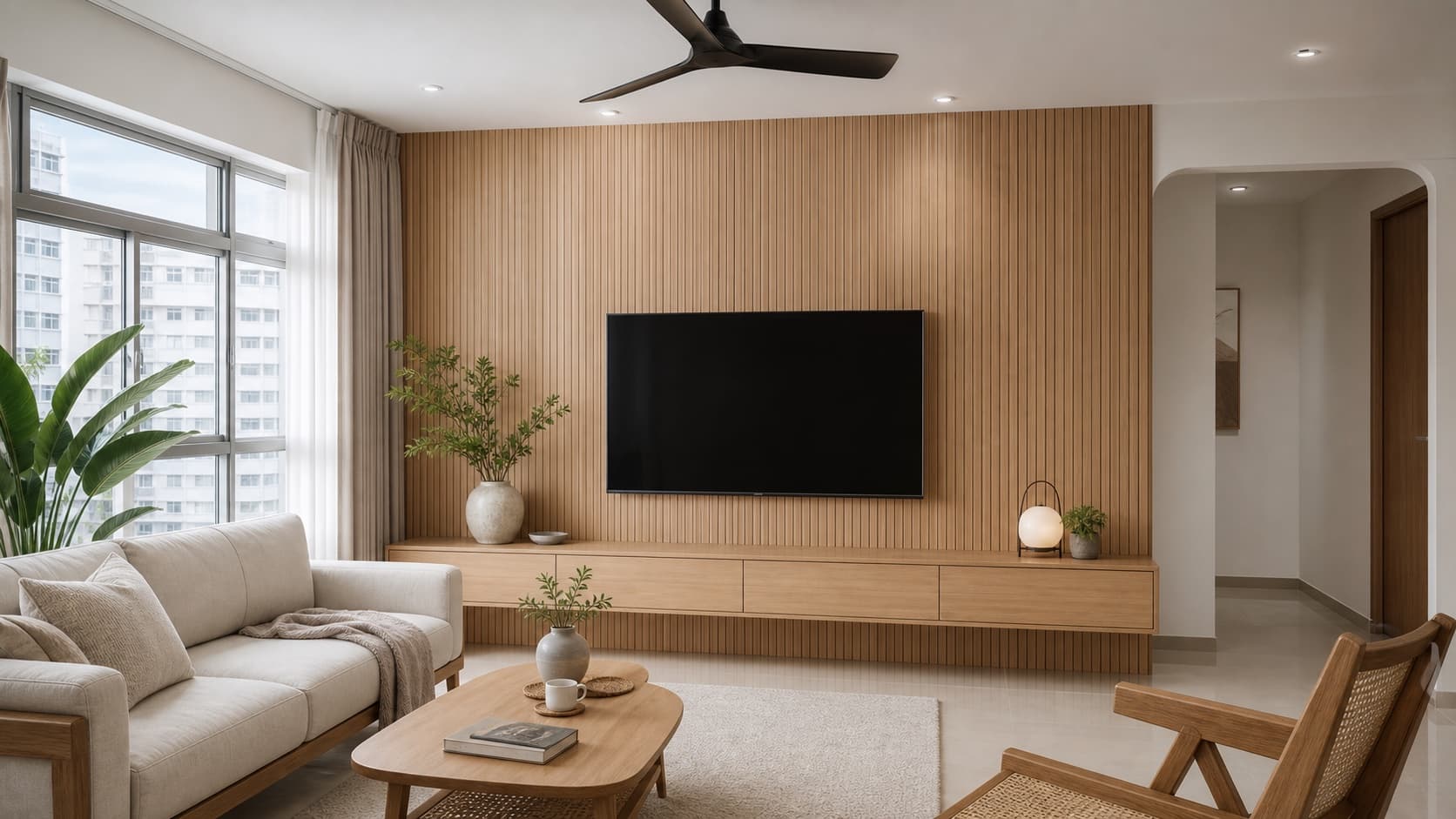
Fluted panels use repeated vertical or horizontal grooves to create shadow, rhythm and texture. In Singapore they appear on television walls, entrance foyers, kitchen islands, bedroom headboards and concealed-door compositions. The detail can make a plain flat feel more tailored, but it can also become an expensive dust-catching surface when the material, scale or location is wrong.
Search results often group together solid wood slats, veneered boards, polymer composites and acoustic panels even though their construction and performance differ. A homeowner should therefore compare the complete system, not just the colour shown in a rendering. This guide explains where fluting adds value, what to ask suppliers and how to use the trend without covering the entire home in one material.
Where Fluted Panels Work Best in HDB and Condo Interiors
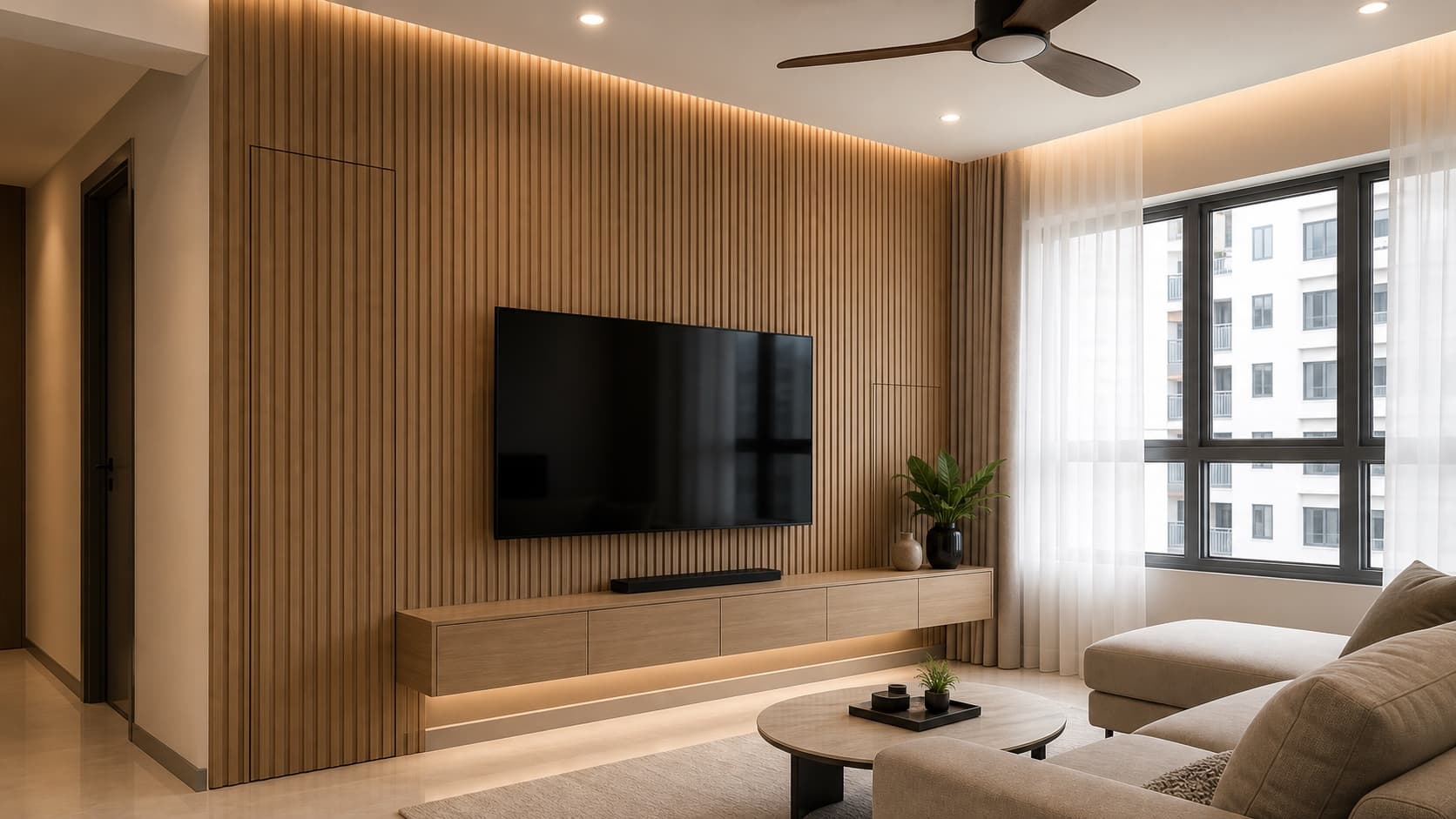
The living-room television wall is the most common application because it is visible from the main seating area and has enough width for the repeated lines to read clearly. Use fluting on one side of the console, around a plain central panel or across a shallow section with a concealed cable route. A full wall can work, but an asymmetrical composition usually feels lighter in a compact room.
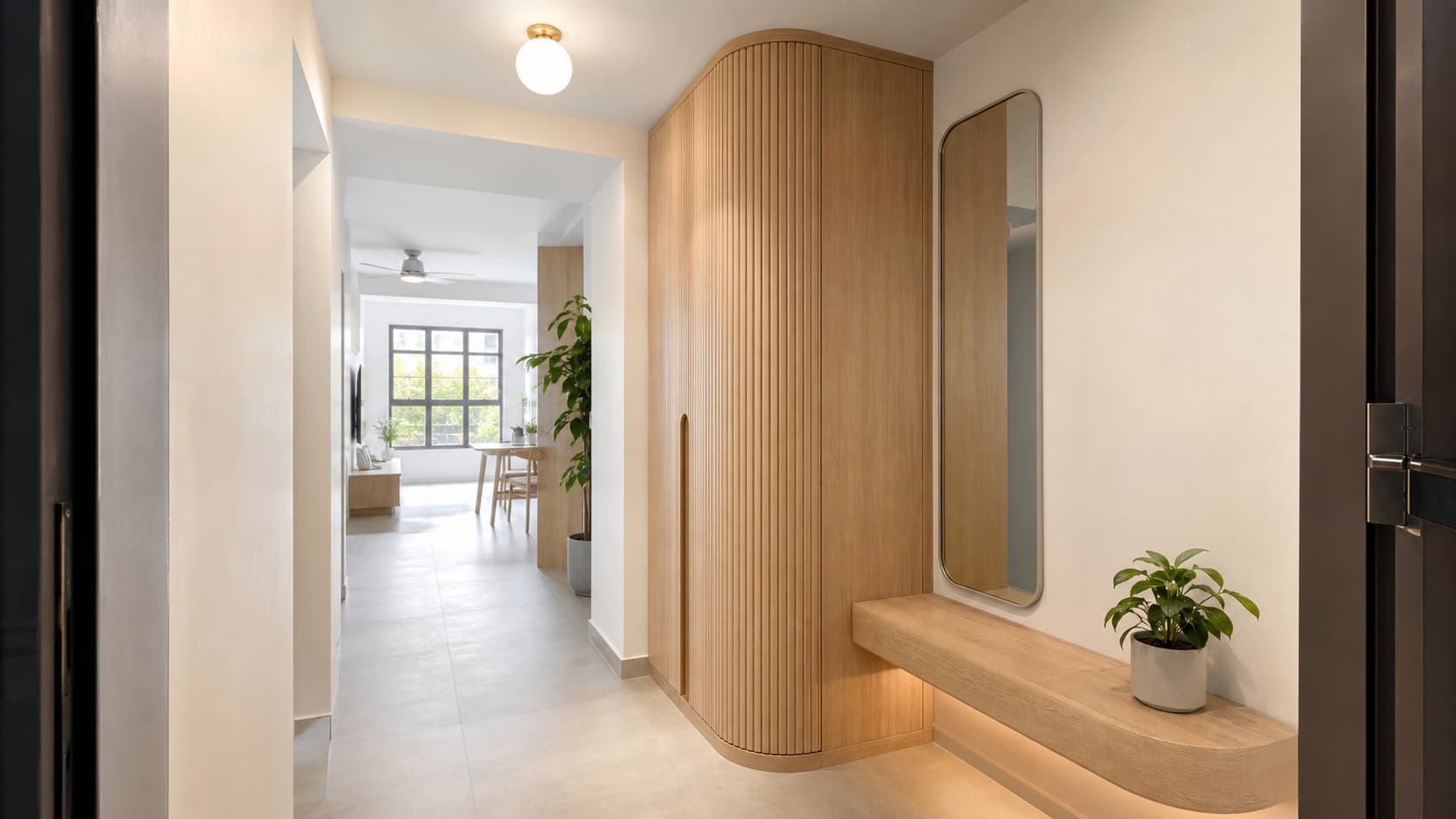
Foyers benefit from a narrower fluted section beside a mirror, bench or shoe cabinet. The vertical rhythm marks the arrival zone without constructing a bulky partition. In a bedroom, a low-relief panel behind the headboard adds warmth while keeping bedside circulation clear. Kitchen-island cladding can introduce texture at eye level, although the surface must tolerate kicks, spills and frequent cleaning.
Avoid using deep grooves immediately beside a hob or in a direct shower zone. Grease and moisture make maintenance harder, and not every substrate is approved for those conditions. Also avoid fixing decorative panels indiscriminately to structural or protected surfaces. HDB states that hacking or indiscriminate drilling on the external face of a household shelter wall for mounting feature-wall panels is not permitted, so verify the current HDB building-work guidelines before detailing anything around a shelter.
Use ElumiHome's living-room visualizer to compare a fluted wall with painted, stone-look or plain carpentry alternatives before ordering material.
Comparing Timber, Veneer, Composite and Acoustic Panels
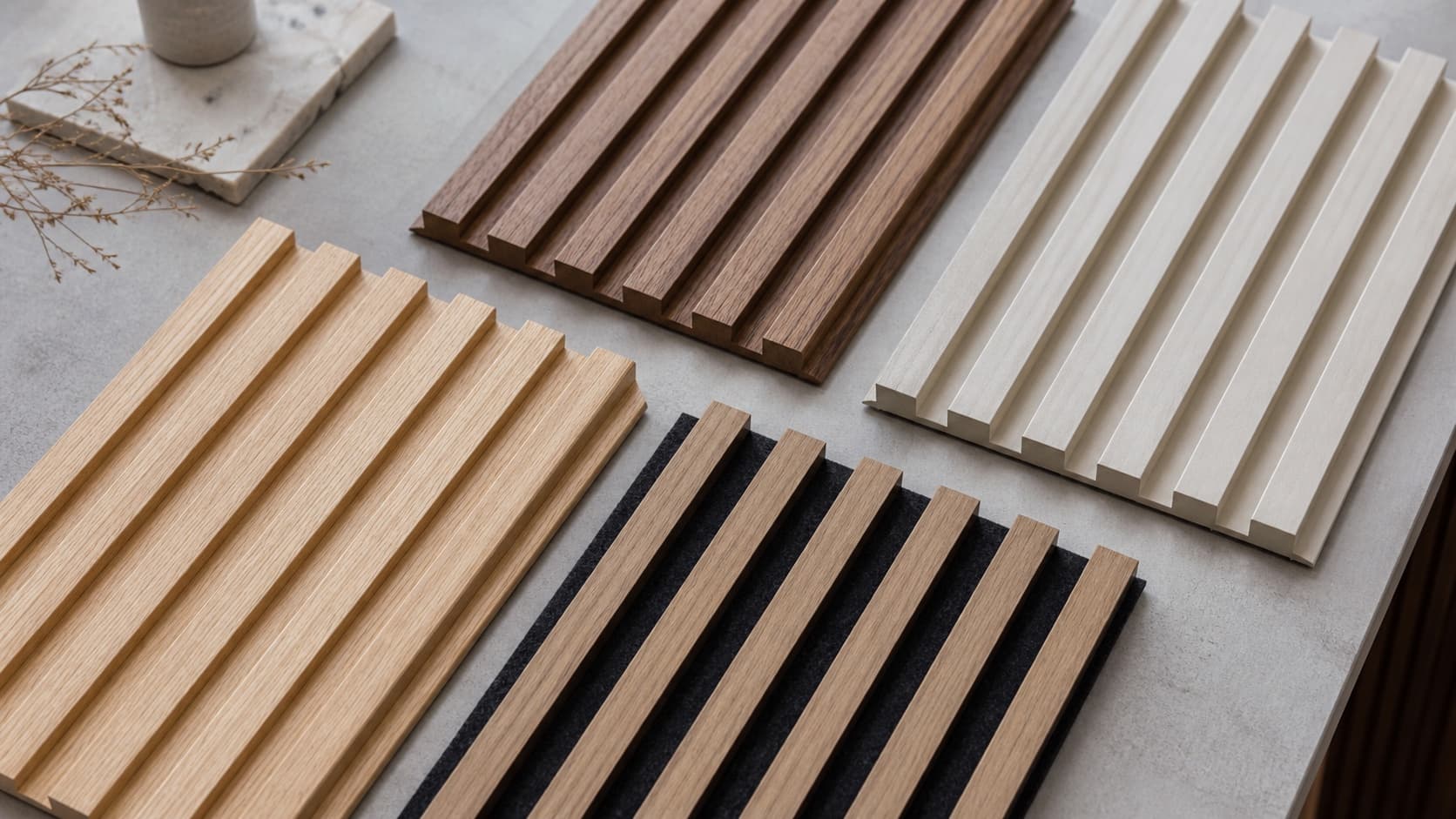
Solid timber has genuine grain and can age attractively, but colour variation, movement and cost are higher. Ask about species, moisture conditioning, finish and how individual slats are fixed. A natural material should not be rejected for variation when variation is part of its appeal, but the supplier should show the expected range.
Veneered panels use a thin real-wood surface over a stable board. They can provide a more consistent wall with less solid timber. Inspect the edge treatment and how repeated leaves are matched. Laminated boards use a printed or manufactured surface and can be easier to coordinate with cabinetry, though close-up realism varies.
Wood-plastic or polymer composite fluted panels are promoted for consistency and moisture resistance. Check the actual technical sheet rather than relying on a generic material label. Ask what the visible surface is, whether the core is suitable for interior use, how corners terminate, what cleaning products are allowed and what happens if one section is damaged.
Acoustic slat panels typically combine decorative slats with an absorbent backing. They may reduce reflected sound, but performance depends on construction, coverage and installation. Request tested acoustic data if sound control is the reason for buying them. A decorative felt-backed panel should not automatically be treated as a complete acoustic solution for traffic noise or neighbour transmission.
For any panel, ask for indoor-air or emission documentation, fire-performance information where relevant, warranty terms and a physical sample. View the sample vertically under the lights planned for the room, because shadow depth can dramatically change the perceived colour.
Fluted Wall Colours, Direction and Design Combinations
Light oak is popular because it adds warmth without absorbing too much light. It pairs naturally with Japandi interiors, off-white walls and warm grey flooring. Walnut or dark brown creates more contrast and suits a modern hotel-like room, but it should be balanced with brighter surrounding surfaces. Painted fluting can match the wall colour for a quieter architectural effect.
Vertical grooves emphasise height and are usually the easiest direction for HDB rooms. Horizontal fluting can widen a composition visually, but long joints and alignment become more obvious. Curved fluted panels are effective on rounded islands or reception-like corners, provided the selected system is designed to bend rather than forced into shape on site.
The groove width should relate to viewing distance. Fine fluting looks refined up close but creates more edges to clean. Broad slats produce stronger shadow and suit a larger wall. Ask the supplier to mock up at least one metre of the real repeat. A thumbnail sample cannot show how ten or twenty repeated lines will feel.
Good combinations include fluted timber with plain microcement-look paint, a simple mirror, matt laminate or a single stone-look surface. Weak combinations often stack fluting, marble veining, LED strips, metallic trims and patterned flooring in one elevation. Choose one lead material and let the other elements support it.
Browse modern contemporary designs and Muji minimalist rooms to see how different visual weights affect compact spaces.
Cost, Installation and Maintenance Questions to Ask
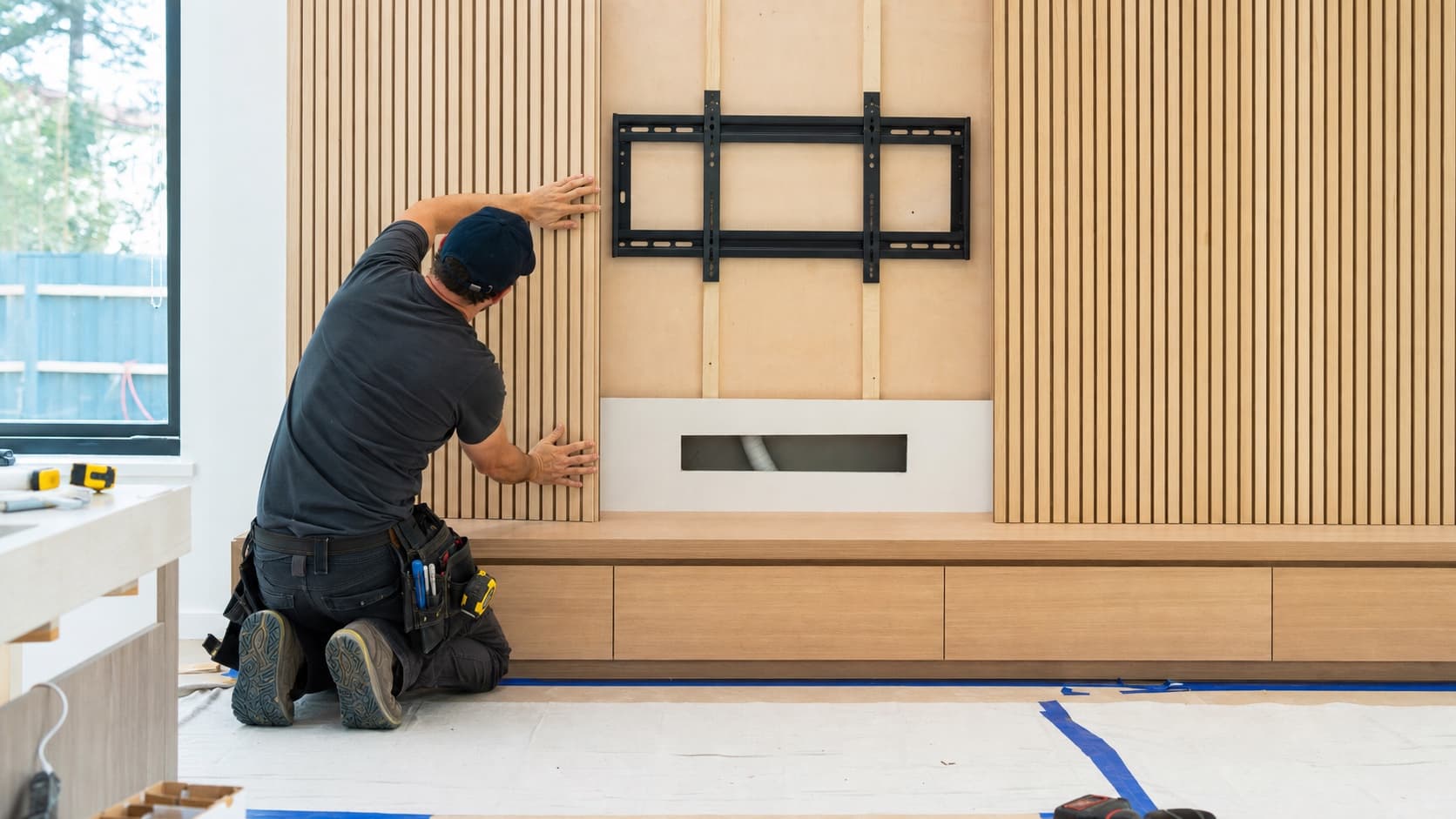
Fluted panel pricing depends on material, panel width, wall preparation, cutting, corners, backing structure, concealed doors, electrical relocation, lighting and access. A square-metre material price is not the installed cost. Request an elevation and itemised scope showing start and end points, joint positions, edge trims, socket treatment and whether painting or making good is included.
For a television wall, decide the bracket position and equipment before installation. Heavy loads should transfer to suitable structural support, not merely to decorative slats. Provide removable access for power, data cables and future replacement. Ventilation around consoles and devices also matters; a visually seamless panel is not useful if servicing requires demolition.
Inspect substrate flatness. Repeated vertical lines exaggerate a crooked wall, uneven ceiling or misaligned panel. Confirm how the installer will set out from visible corners and how the final partial panel will be handled. Around doors, agree whether the leaf, frame and adjacent wall align and where hinges or handles remain accessible.
Maintenance should influence groove depth and location. Use a soft brush or vacuum attachment for dust and follow the surface manufacturer's cleaning instructions. Keep spare material from the same batch because replacing one damaged strip later may reveal a colour difference. In homes with pets or wheeled furniture, protect vulnerable lower edges.
The strongest result is usually a focused application with clear detailing, not the greatest possible coverage. Visualize the elevation, approve a full-size sample and coordinate lighting, carpentry and electrical work before installation. That process turns fluting from a short-lived trend into a useful layer of texture that fits the room.
Frequently Asked Questions
- Are fluted panels suitable for HDB flats?
- Yes, when they are installed on an appropriate non-restricted surface and detailed for the room's humidity, cleaning and fire-safety requirements. They are commonly used on living-room, foyer and bedroom walls, but household shelter walls require special care under HDB rules.
- Which fluted panel material is best in Singapore?
- There is no universal best material. Solid timber offers natural variation, veneered or laminated boards provide a controlled appearance, composite panels can improve moisture resistance, and acoustic slat systems add sound absorption. Compare substrate, surface layer, emission documentation, fire performance and warranty.
- Do fluted wall panels make a room look smaller?
- Dark, wide or heavily projected panels across every wall can make a compact room feel enclosed. A lighter finish, narrower feature area and vertical rhythm can add height and texture without overwhelming the space.
- Can fluted panels be installed behind a television?
- They can form a television feature wall, but the design should provide mounting support, cable access, ventilation and a practical way to remove or service equipment. The decorative panel itself should not be assumed to carry the television load.
See your home transformed in typically 1–2 minutes
Upload your room photo and get stunning AI redesigns with HDB prompt-based HDB planning guidance and indicative SGD renovation cost ranges.
Try 1 Room FreeNo credit card required