Japandi Bedroom Design Singapore: Ideas for HDB and Condo Bedrooms
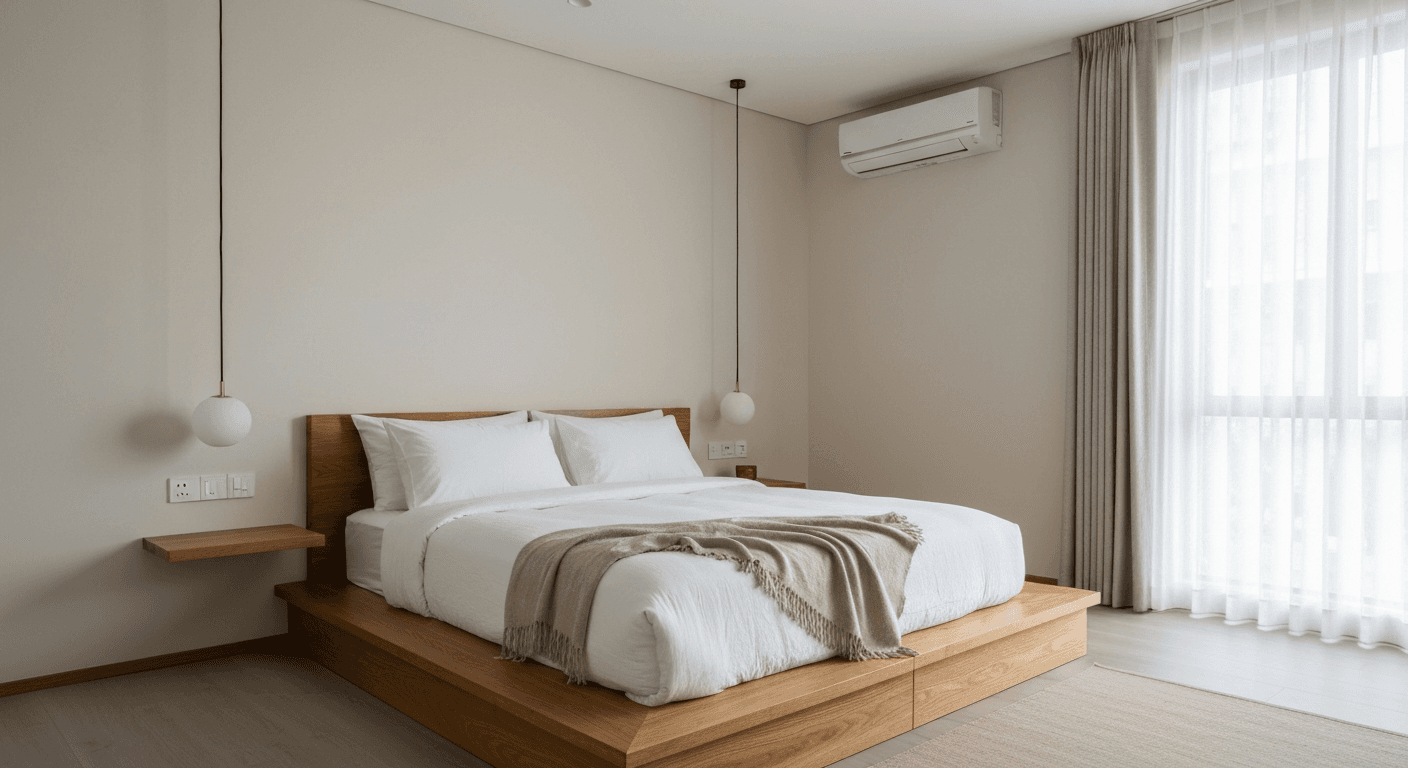
A Japandi bedroom is perhaps the most personally rewarding space to design. Quiet, serene, deliberately simple — it's the antidote to Singapore's fast-paced urban life. Here's how to create one in your HDB or condo bedroom. For a broader look beyond this one style, browse our HDB bedroom design ideas.
What Makes a Japandi Bedroom?
Japandi (Japanese + Scandinavian) in the bedroom is defined by:
- Low-profile furniture — platform beds or beds close to the floor
- Natural materials — oak, ash, bamboo, linen, cotton, jute
- Warm neutral palette — warm whites, greiges, soft clay, muted sage
- Deliberate minimalism — nothing on surfaces that doesn't have purpose or beauty
- Natural light — sheer linen curtains to filter, not block, morning light
- Wabi-sabi touches — one handmade ceramic, one imperfect textile, one organic form
New to the style itself? Our guide to what Japandi is explains the philosophy behind these choices.
Colour Palettes for a Japandi Bedroom
Palette 1: Warm Sand
- Walls: Dulux Creamy Fleece or Nippon Evening Sand
- Ceiling: Pure white
- Bedding: Natural linen in warm white or oatmeal
- Accents: Terracotta lamp, dried pampas grass
Palette 2: Soft Sage
- Walls: Dulux Muted Sage or Nippon Nordic Sage
- Ceiling: Warm white
- Bedding: White duvet with sage cushion
- Accents: Dark stained oak, black metal lamp
Palette 3: Charcoal and Natural
- Walls: One feature wall in deep charcoal (Dulux Obsidian or Night Watch)
- Other walls: Warm white
- Bedding: White with warm grey throw
- Accents: Oak furniture, aged brass hardware
HDB Bedroom Sizes and Japandi Furniture
HDB bedrooms are compact. Japandi's low-profile furniture philosophy actually works to your advantage — it creates more visual breathing room.
Common HDB Master Bedroom Sizes
- 3-room HDB master: ~12 sqm (enough for queen bed + wardrobe + small desk)
- 4-room HDB master: ~14–16 sqm (comfortable for king bed + walk-in wardrobe)
- 5-room HDB master: ~16–20 sqm (generous; walk-in wardrobe or sitting area possible)
Japandi Bedroom Furniture Sizing Guide
| Item | Recommended for HDB | Why |
|---|---|---|
| Bed | Platform or tatami-style (low profile) | Maximises vertical space perception |
| Wardrobe | Floor-to-ceiling built-in | Maximises storage, clean look |
| Bedside table | Floating wall-mounted | Saves floor space |
| Desk | Fold-down wall-mounted or narrow floating shelf | Optional in small bedrooms |
| Dresser/vanity | Integrated into wardrobe system | Saves space |
The Japandi Bed — The Centrepiece
The bed is everything in a Japandi bedroom. Get it right, and the rest falls into place.
Platform Bed Recommendations
Platform beds (no box spring, no bed frame legs) give the truest Japandi feel. Look for:
- Solid oak or walnut construction
- Simple, clean headboard with no tufting or ornate detail
- Natural wood or linen-wrapped headboard
Where to buy in Singapore:
- Castlery: Oak and walnut platform beds at S$1,200–S$2,500
- Commune Lifestyle: Premium solid wood options
- IKEA MALM (for budget): With a tatami mat base, it can approximate the look
- Taobao with local carpenter modification: For custom low-profile platform beds
Bedding for Japandi
- Thread count: 300–500 Egyptian cotton or bamboo cotton
- Colours: White, natural linen, warm grey, soft sage
- Texture: Washed linen or stonewashed cotton for the signature "relaxed" Japandi look
- Avoid: Printed patterns, high-gloss fabrics, overly white "hospital" look
Wardrobe Design for Japandi Bedrooms
The wardrobe is usually the largest piece of furniture in an HDB bedroom. A poorly designed wardrobe can undermine the entire Japandi aesthetic. If your bedroom has the floor area to spare, you might instead plan a dedicated walk-in wardrobe for a calmer, clutter-free room.
Japandi wardrobe principles:
- Flush slab doors with no handles (push-open rebound) or minimalist recessed pulls
- Matte laminate — no glossy surfaces
- Wood grain in warm tones — oak, teak, or walnut grain (printed laminate works fine)
- Integrated lighting — warm LED inside cupboards
- Consistent grain direction — vertical grain on doors looks taller and more architectural
Lighting in a Japandi Bedroom
Lighting in a Japandi bedroom is warm and layered — never harsh.
Ceiling: Remove the standard single-point ceiling light. Replace with recessed warm-white downlights (2700K) positioned away from the centre.
Bedside: Wall-mounted bedside pendants or table lamps with natural stone, rattan, or ceramic bases. Warm bulb (2200K–2700K).
Ambient: Warm LED strip behind the headboard or under the platform bed creates a soft glow without ceiling glare.
Avoid: Cool white light (>4000K), bright overhead spots, harsh directional lighting.
Key Accessories to Complete the Look
Less is more in a Japandi bedroom. Curate 3–5 accessories maximum:
- One organic ceramic vase (muted colour, handmade-look) with dried pampas or single stem
- One woven basket as a bedside catch-all
- One artwork — minimalist, nature-inspired, framed in natural wood or black
- One throw blanket draped casually over the bed corner
- One textured rug — jute, cotton flatweave, or low-pile wool in neutral tones
Visualise Your Japandi Bedroom
Upload your bedroom photo and see it redesigned in Japandi style using ElumiHome.
Related Guides
Frequently Asked Questions
- What furniture do I need for a Japandi bedroom?
- A Japandi bedroom centres on low-profile or platform beds in natural wood, paired with simple bedside tables and minimal storage. Natural materials like oak, ash, linen, and cotton define the look, while surfaces are kept clear of clutter. One handmade ceramic or textile piece adds the characteristic wabi-sabi touch.
- Does Japandi work in a small HDB bedroom?
- Yes, Japandi suits small HDB bedrooms well because its low furniture and minimal palette make compact rooms feel calmer and more open. A platform bed close to the floor keeps the ceiling feeling taller, and built-in wardrobes preserve floor space. Singapore HDB common bedrooms are often around 7–10 sqm, so restraint is essential.
- What colours suit a Japandi bedroom in Singapore?
- Warm whites, greige, soft clay, and muted sage are ideal for a Japandi bedroom, paired with natural wood tones. These warm neutrals create a restful atmosphere that softens Singapore's bright daylight. Sheer linen curtains help filter morning light rather than block it, reinforcing the serene mood.
- How do I add storage to a Japandi bedroom without clutter?
- Use built-in wardrobes with handleless flat fronts and concealed storage so the room stays visually quiet. Choosing wood-grain or muted laminate finishes keeps carpentry blending into the walls rather than dominating the space. The Japandi principle is that everything on display should have purpose or beauty, with the rest tucked away.
See your home transformed in typically 1–2 minutes
Upload your room photo and get stunning AI redesigns with HDB prompt-based HDB planning guidance and indicative SGD renovation cost ranges.
Try 1 Room FreeNo credit card required