Limewash Paint Singapore: Colours, Cost and Room Ideas
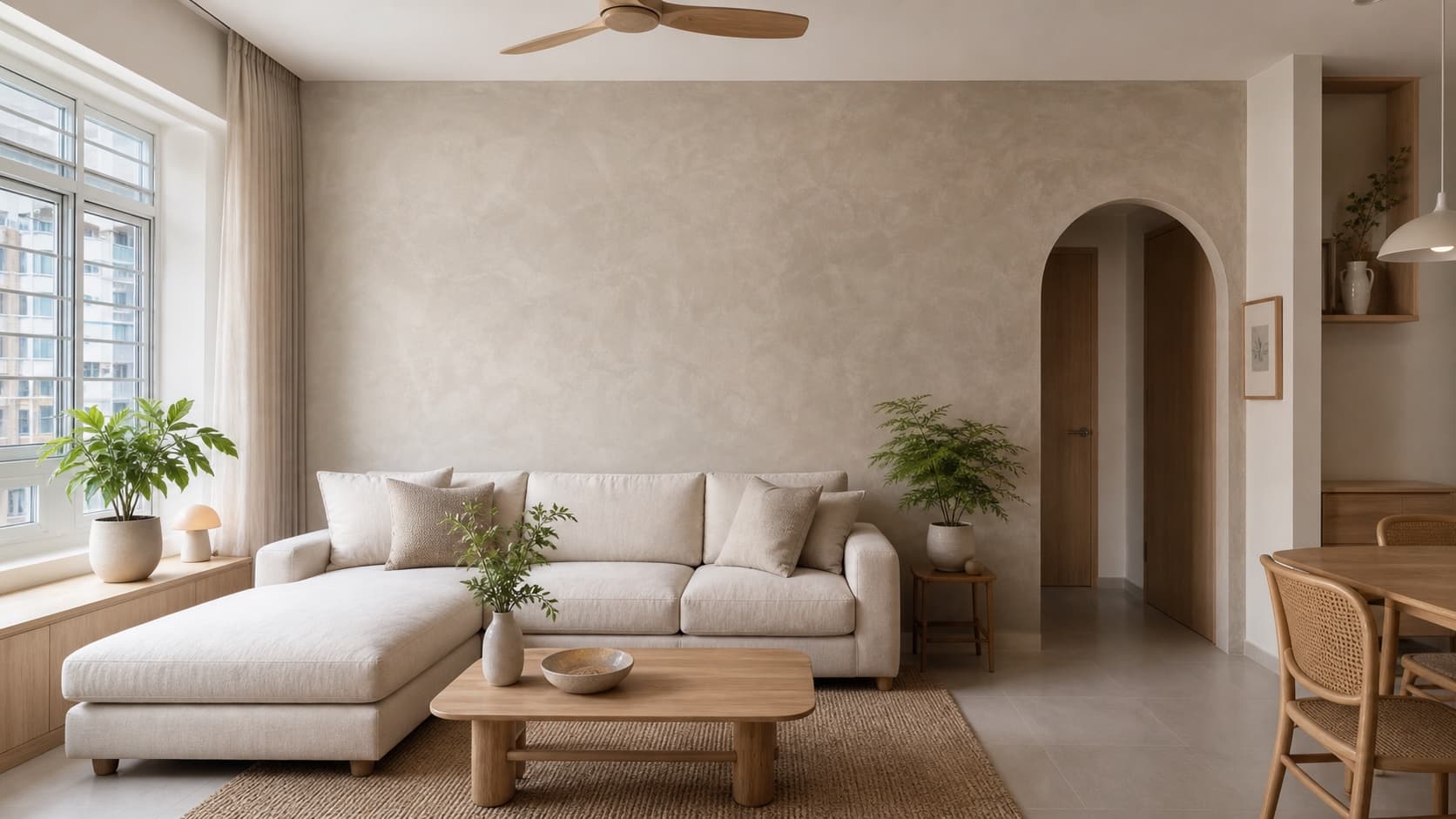
Limewash paint has become a popular way to give Singapore interiors depth without adding wallpaper, timber strips or a heavy feature-wall structure. Instead of a perfectly flat colour, the finish uses overlapping movement and subtle tonal variation. The result can feel soft, mineral and handmade, which suits Japandi, wabi-sabi, Mediterranean and warm contemporary homes.
The term can describe traditional mineral limewash or a modern water-based decorative coating that recreates the look. That distinction matters because preparation, approved surfaces and cleaning instructions vary by manufacturer. For example, Nippon Paint describes its local Momento Limewash Effect as a water-based textured wall coating and specifies a sealer, basecoat and finish-coat system. Always follow the selected product rather than assuming every limewash behaves the same way.
This guide explains where the finish works, how to select a colour, what drives the budget and how to avoid a patchy result that looks accidental rather than considered.
What Limewash Paint Looks Like in a Singapore Home
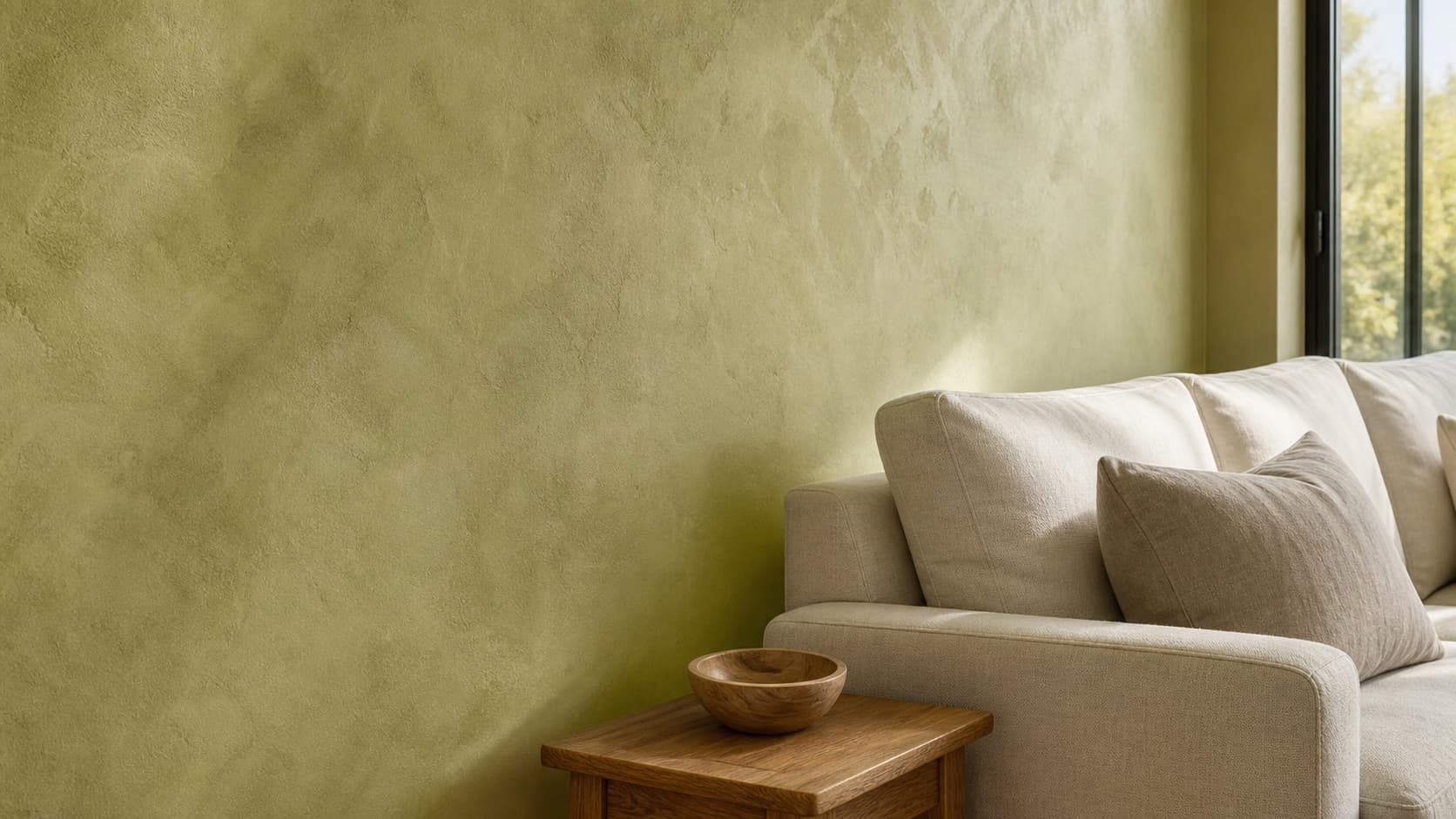
A successful limewash wall is not one solid colour. Broad, feathered brush movement creates lighter and darker areas that change gently as daylight moves across the room. In a compact HDB living room, this can add dimension without reducing usable floor area. It is especially useful behind a sofa, dining bench, bed or simple television console where the wall can remain visually open.
The finish looks most convincing when the rest of the room is restrained. Natural timber, linen, woven fibres, matt ceramics and warm-white lighting allow the wall texture to remain the focal point. If the room already has veined stone, fluted panels, patterned curtains and several decorative colours, another expressive surface can make the composition busy.
Scale also changes the effect. Fine tonal movement reads as calm from across a living room, while strong contrast creates a more rustic statement. Ask for a large sample board, not a small colour chip. View it beside the actual flooring and carpentry in morning and evening light. A sample that looks warm in a showroom may appear grey or pink under your home's lighting.
Before committing, use the AI room redesign tool to compare a quiet mineral wall against a conventional painted wall. It will not reproduce an exact paint product, but it can help test whether the room benefits from texture or needs a simpler backdrop.
Best Rooms, Colours and Interior Styles for Limewash
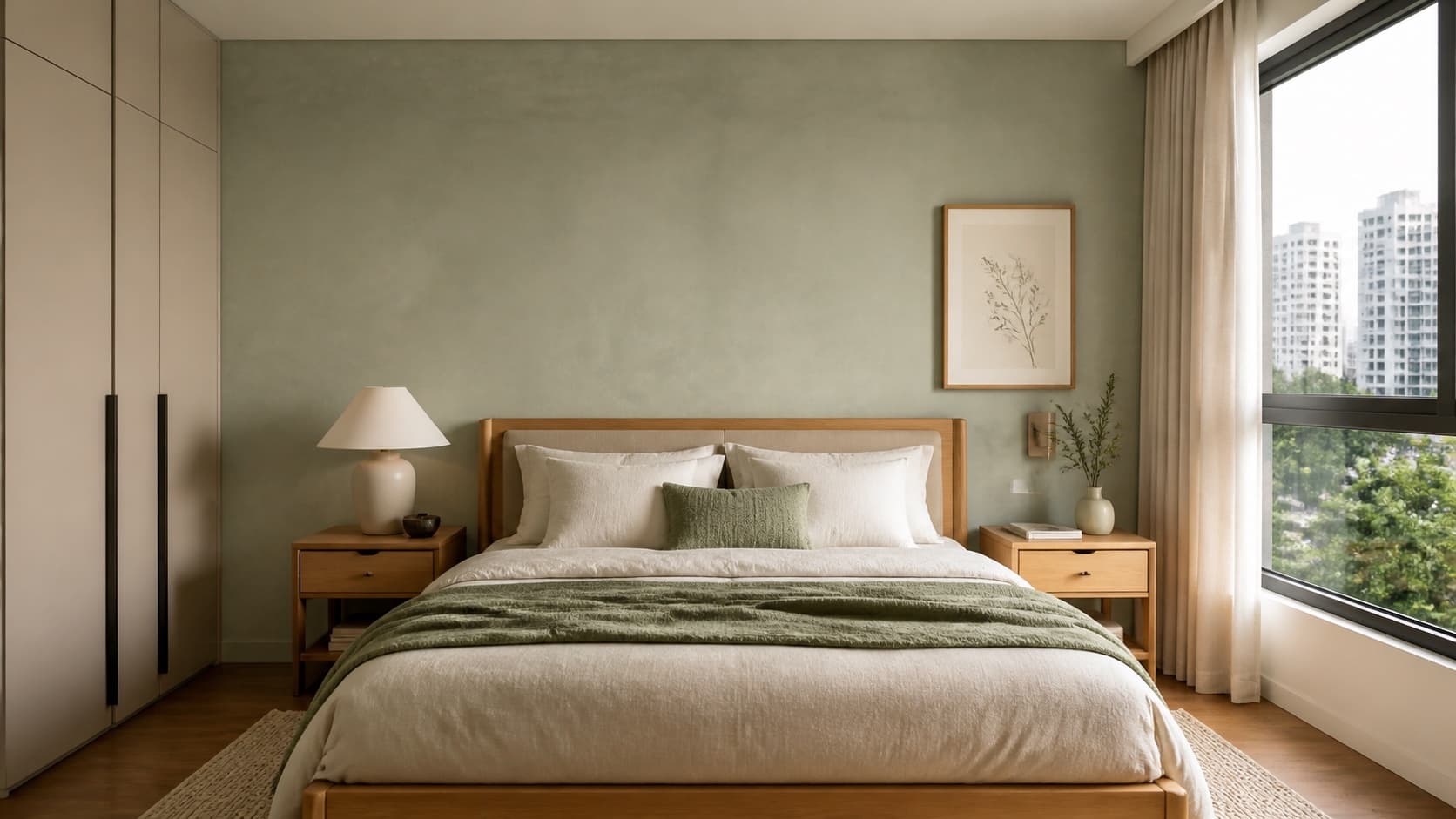
Living rooms and bedrooms are the easiest places to start because they are generally dry and the main wall can be appreciated from a distance. A dining wall can also work well, particularly with a pendant light that grazes the surface. Kitchens and bathrooms need more caution: steam, grease, splashes and frequent wiping can be unsuitable for some decorative systems. Check the product's approved use and keep it away from direct wet zones unless the manufacturer explicitly allows them.
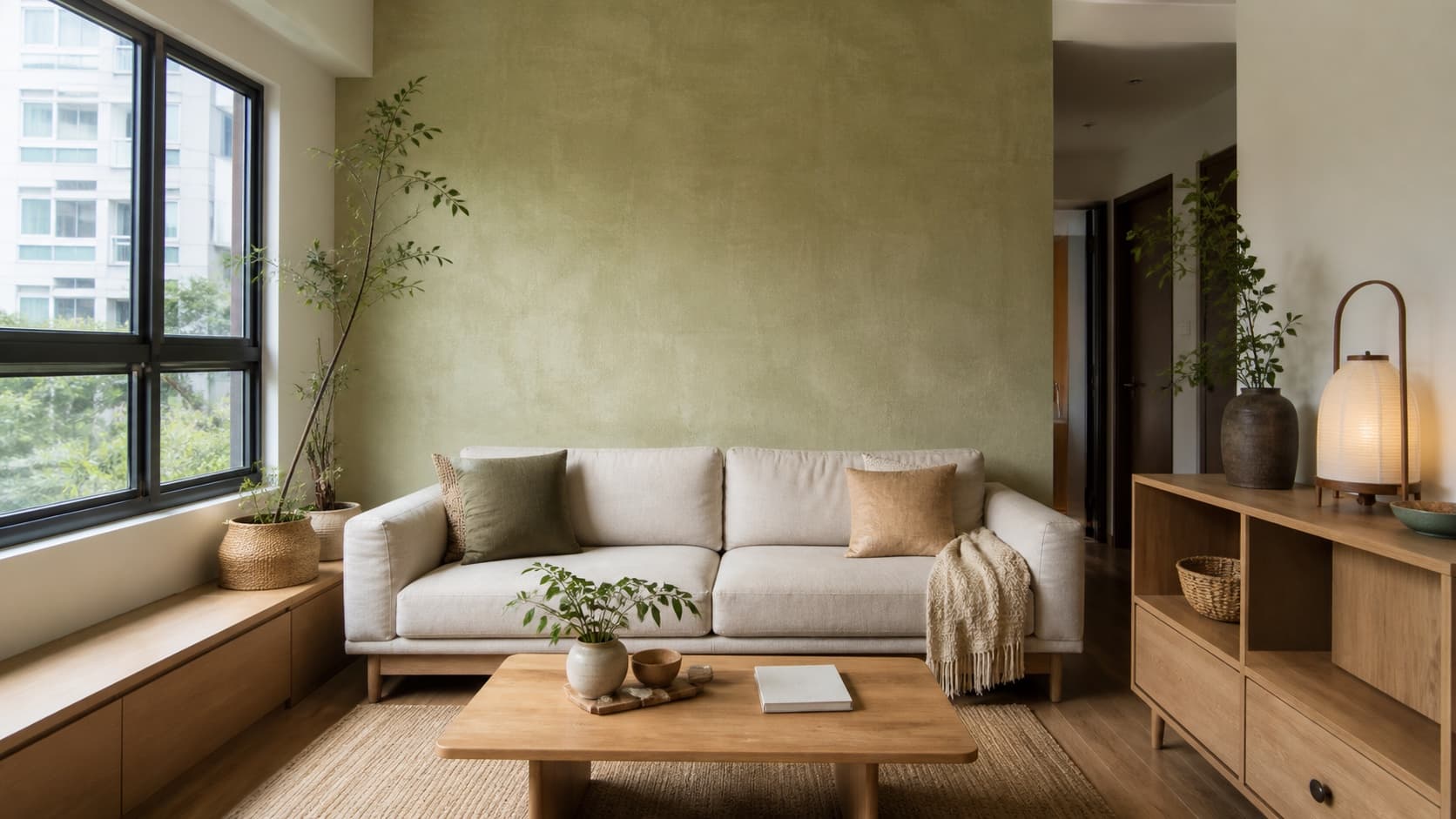
Warm off-white and sand are forgiving choices for small rooms. They add movement while preserving brightness. Mushroom, clay and muted taupe create a cocooning bedroom. Sage or grey-green works with light oak and black accents. Terracotta can be effective on one dining or foyer wall, but it should be balanced with simpler surrounding surfaces.
Match the colour to the design language:
- Japandi: warm greige, oat or putty with pale oak and black details.
- Wabi-sabi: stone, mushroom or clay with imperfect ceramics and aged timber.
- Mediterranean: chalky white, sand or muted terracotta with textured fabrics.
- Warm contemporary: soft taupe or olive-grey with cleaner furniture profiles.
For more combinations, compare the Japandi style guide, wabi-sabi interiors and the broader interior design styles guide. Keep ceilings and adjacent walls quieter so the finish has a clear beginning and end.
Limewash Paint Cost and Application Factors
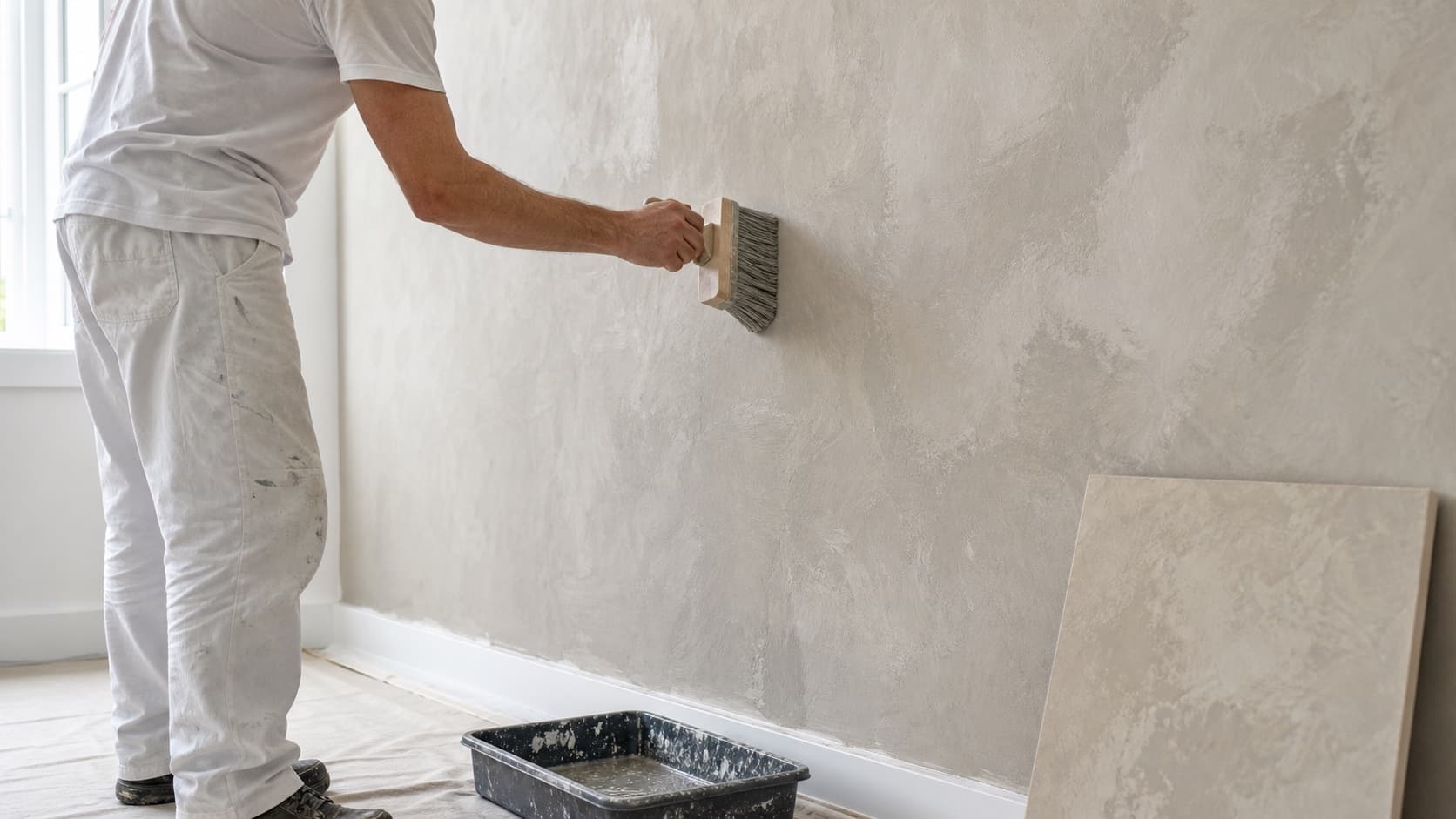
There is no useful single price without knowing the wall condition and coating system. The visible finish may be only the last part of the job. Existing wallpaper adhesive, hairline cracks, powdery paint, water stains or a glossy coating can require cleaning, patching, sanding and sealing. Dark-to-light colour changes may also need more base preparation.
An itemised quotation should state the measured area, protection of floors and furniture, repair allowance, primer or sealer, basecoat, number of decorative coats, access requirements and touch-up policy. Clarify whether the painter will make a sample panel before completing the full wall. Decorative work depends on hand movement, so experience and an agreed reference sample matter as much as the product price.
DIY can be reasonable for a small wall if the manufacturer supports homeowner application and you are comfortable maintaining a wet edge. Work from the top corner in manageable sections, vary strokes consistently and avoid stopping in the middle of a visible area. Two people should not split one wall unless they have practised the same technique, because changes in pressure and brush direction can be obvious.
If painting is part of a whole-flat refresh, compare it with conventional work in our HDB painting cost guide. Limewash-effect finishing usually deserves its own line item rather than being bundled vaguely under standard emulsion paint.
Maintenance, Touch-Ups and Mistakes to Avoid
Start with the substrate. No decorative finish can solve active dampness, leaking pipes or recurring condensation. Investigate the cause, allow the wall to dry and repair it before coating. Applying over a problem may trap visual evidence temporarily, but stains and failure can return.
Keep the product name, colour code, batch information, basecoat colour and a photograph of the approved sample. A local touch-up can remain visible because the new brushwork overlaps an aged finish. Depending on the location and product, refreshing the full wall section may look more consistent than touching one small mark.
Common mistakes include choosing from a tiny swatch, using high-contrast movement in a cluttered room, skipping the specified primer, applying under harsh mixed lighting and expecting a washable kitchen coating without checking the technical data. Another mistake is treating every irregularity as a defect: controlled variation is the point, but obvious edges, roller-like bands or abrupt colour blocks usually indicate poor technique.
Clean gently according to the manufacturer's instructions. Do not assume a matt textured finish tolerates the same scrubbing as a washable interior emulsion. Place chair backs, luggage and frequently handled switches so they do not repeatedly rub the feature area.
The safest design process is to test the visual direction first, approve a physical sample second and only then commission the wall. Start with one focal surface rather than coating every room. A single well-lit limewash wall can give a Singapore home character while keeping the overall interior practical and calm.
Frequently Asked Questions
- Is limewash paint suitable for Singapore homes?
- Yes. Limewash-style finishes can work well in HDB flats and condos when they are applied to a properly prepared, dry interior wall. In humid rooms, address leaks and condensation first and use a system recommended for the substrate.
- How much does limewash paint cost in Singapore?
- The total varies with wall size, surface repairs, primer and basecoat requirements, product choice, colour, number of coats and whether a specialist painter is needed. Request an itemised quote rather than comparing only a per-square-foot headline price.
- Can I apply limewash over normal interior paint?
- Sometimes, but preparation depends on the product. Many decorative limewash-effect systems require cleaning, repairs, a compatible sealer or primer and a selected basecoat before the finish coats. Follow the manufacturer's full system rather than applying directly over an unknown coating.
- Is limewash difficult to maintain?
- Its tonal variation hides minor visual irregularities, but strong scrubbing can create shiny or uneven patches. Keep leftover product and the application details for touch-ups, and test cleaning in a discreet area first.
See your home transformed in typically 1–2 minutes
Upload your room photo and get stunning AI redesigns with HDB prompt-based HDB planning guidance and indicative SGD renovation cost ranges.
Try 1 Room FreeNo credit card required